Ngorongoro Crater
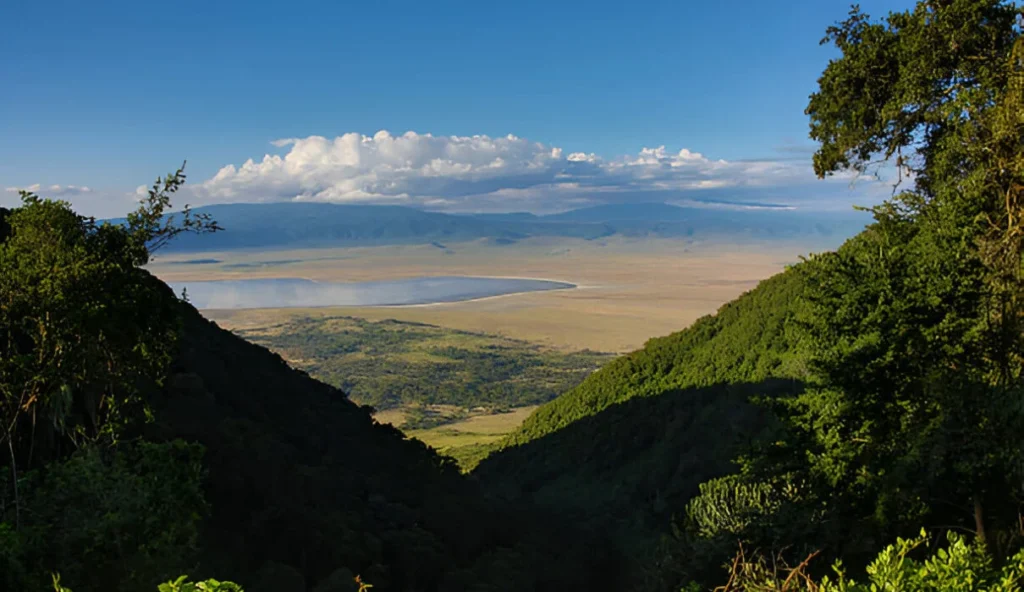
Ngorongoro Crater is one of Africa’s most extraordinary natural wonders and a flagship destination of Tanzania’s northern safari circuit. Formed over two million years ago after a massive volcanic eruption, the crater is the world’s largest intact and unflooded volcanic caldera. Its vast floor stretches about 260 square kilometers and is enclosed by steep walls rising up to 600 meters, creating a natural sanctuary for wildlife. Because of this unique formation, animals remain within the crater year-round, making it one of the most reliable places in Africa for exceptional game viewing in a single day.
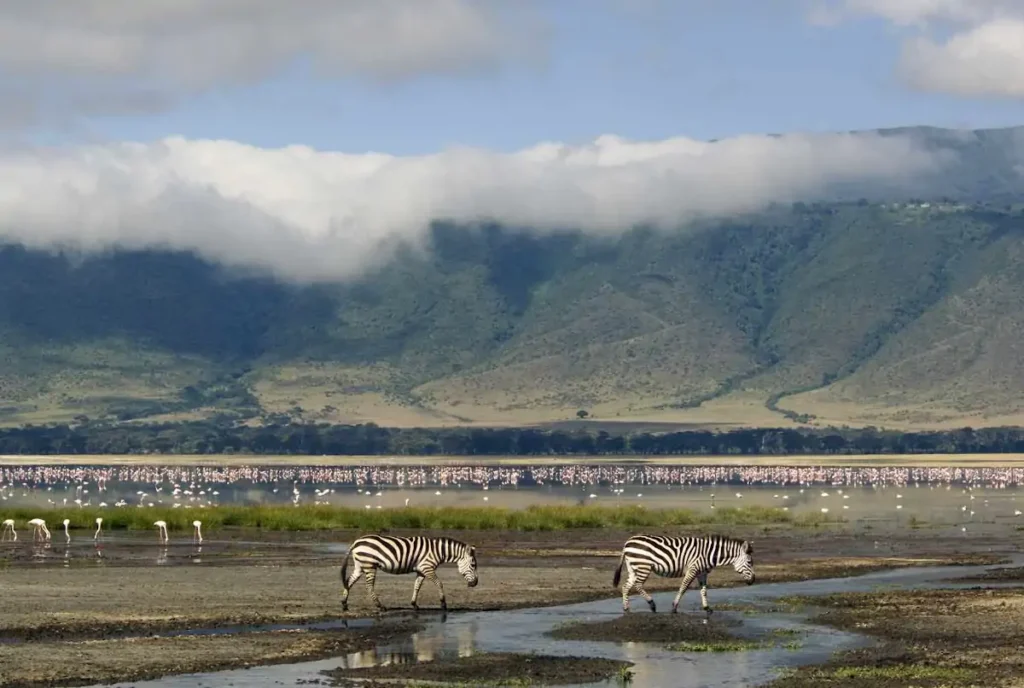
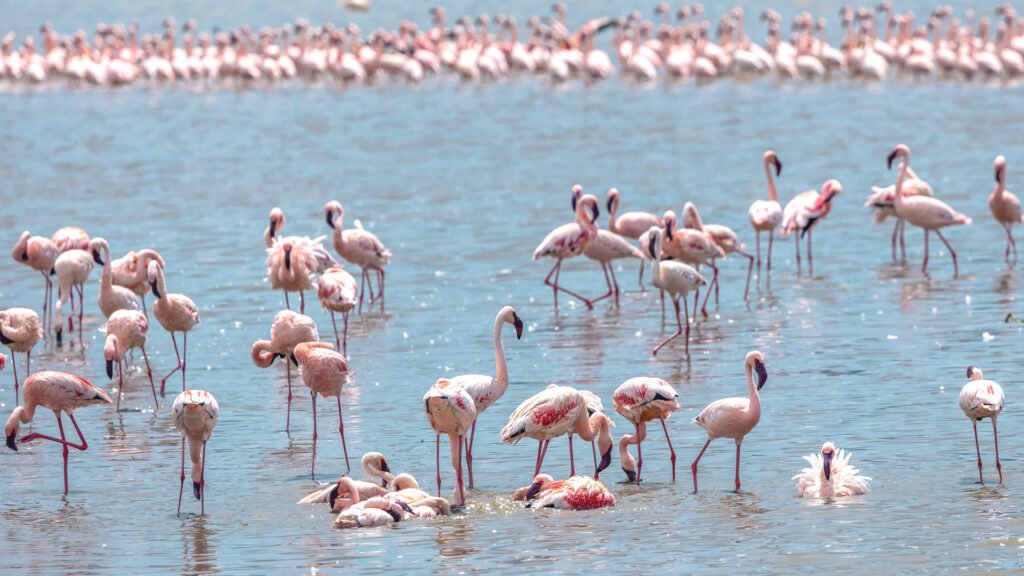
The crater floor is a mosaic of diverse ecosystems, including open grasslands, acacia woodlands, swamps, and seasonal lakes. This rich habitat supports an incredible concentration of wildlife, including elephants, lions, leopards, cheetahs, buffaloes, zebras, wildebeest, and hippos. Ngorongoro is also one of the best places in Tanzania to spot the critically endangered black rhinoceros, protected within the crater’s boundaries. Birdlife is equally impressive, with flamingos often gathering at Lake Magadi alongside pelicans, storks, and numerous raptor species. The abundance of prey makes the crater a stronghold for predators, offering dramatic wildlife interactions throughout the year.
Beyond wildlife, Ngorongoro holds deep cultural and conservation significance. It lies within the Ngorongoro Conservation Area, a UNESCO World Heritage Site where wildlife conservation coexists with the traditional lifestyle of the Maasai people. This rare multiple-land-use model allows pastoral communities to live alongside wild animals while preserving the area’s ecological balance. Visitors not only experience breathtaking scenery and dense wildlife populations but also gain insight into sustainable conservation efforts and local cultures. Ngorongoro Crater is more than a safari destination—it is a living testament to nature’s power, harmony, and resilience, leaving a lasting impression on every traveler who descends into its ancient depths.